

How to create a strategy for success?
Did you know that the 1960s and 2020s have surprisingly much in common? In both decades, global tensions evoke the spirit of the Cold War, and the arms race grips the world like the price of electricity on the stock exchange grips electricity-saving initiatives. The self-esteem and sense of security of many nations, communities, businesses and individuals are being tested. What is our strategy to get out of the crisis and ensure growing prosperity through competitive advantage? I suggest as a remedy the strategy model successfully used by President John F. Kennedy in the 1960s, which has reportedly helped man reach the Moon!
FIVE ELEMENTS OF A SUCCESSFUL STRATEGY
1. STORY (VISION)
John F. Kennedy recognized that American national pride was buried deeper than the deepest point of Death Valley in the Sierra Nevada desert. He recognized that what was needed now was a story (a vision) that was both experiential and visionary. Together with his speechwriters, the President shaped a vision that helped to put the world power back on its feet. In its simplicity, the vision story was: ”Make America Great Again, by sending a man to the moon!”.
The best strategies for success and strong visions are like wedding traditions, they have: ”Something new, something old, something borrowed and something blue”. Proof of this is the 45th President of the United States, who took office by re-launching the vision of the 1960s success strategy in his own triumphant election campaign. But vision alone does not necessarily carry the day, as our recent history shows.
2. OBJECTIVE(S)
An ambitious vision enables successful and inspiring goals. The main and ultimate goal was of course to conquer the moon, but the project also had other important objectives, such as developing appropriate technology that would enable the main objective.
3.ROADMAP (STRATEGIES)
Once the vision and objectives are clear, it is important to identify where you are now and where you are going. Strategies are the roadmap to follow in order to achieve your goals and vision. They are choices about what to do and what not to do. John F. Kennedy's national vision and goals were broken down into smaller entities and, for example, NASA, the US federal government's aerospace agency, built its own roadmap, which included 8 years, 10 training missions, 400 000 engineers, scientists and technicians, and 150 billion to achieve the goal with a landing craft only 3 metres long.
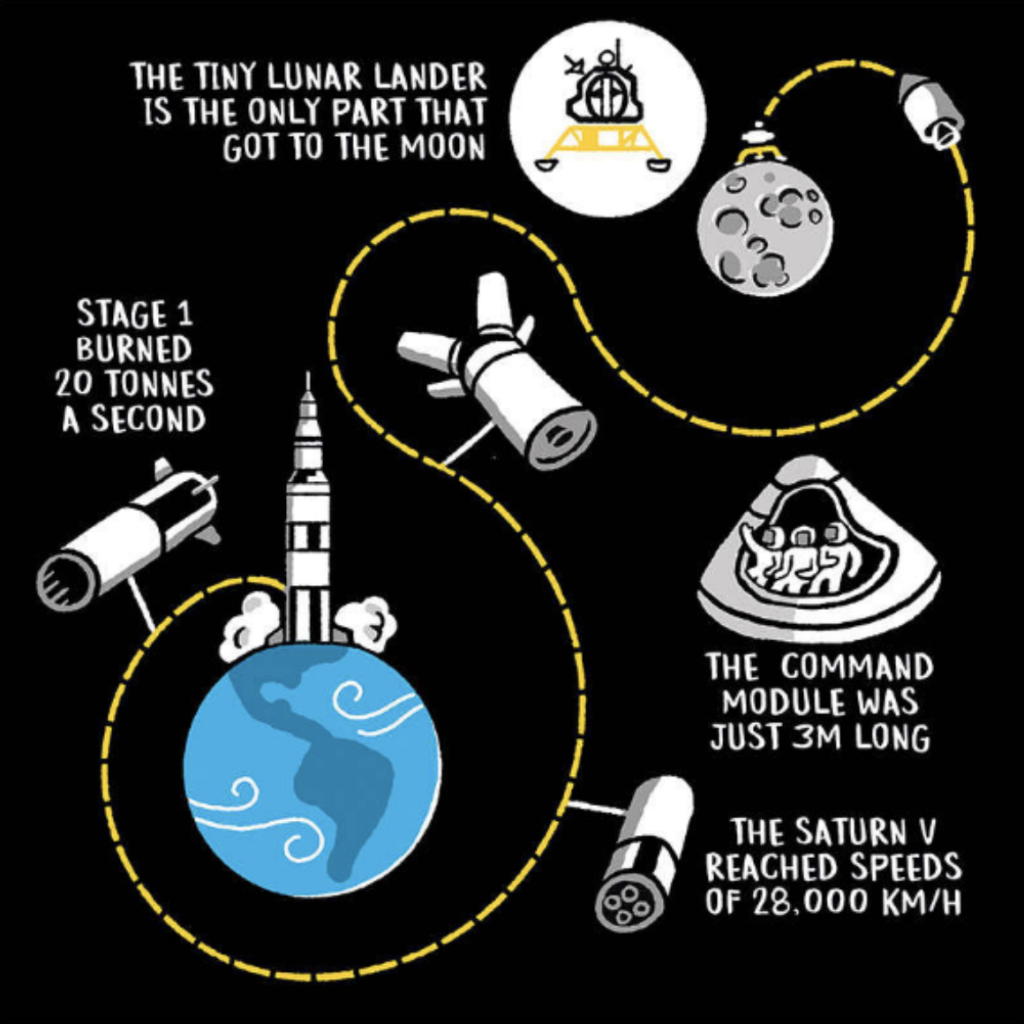
Photo source: https://www.iop.org/
4.DOING
The strategy for success is broken down into key elements at the level of individual professionals. The story goes that when John F. Kennedy visited NASA headquarters, he met a cleaner in the corridor and asked him, ”What do you do?”. To which the cleaner replied: ”Mr. President, I make America proud by putting a man on the moon, by keeping the R&D department clean and orderly.” Is your strategy for success narrative, goal-oriented, roadmap-like, clear and ultimately relevant to each individual professional's daily work?
5.OUTCOME
As management guru Peter Drucker has said, ”if you can't measure it, you can't manage it.” A good strategy includes measurable results (KPIs). Success strategy design and management understands that you can't manage results per se, only what you do. John F. Kennedy's success strategy took humanity, posthumously for the President, to the Moon!
If you want to ensure a successful strategy for you too, contact us!